
- Professor
Biography
Education
- Ph.D., Sociology, 2001, University of Texas at Austin
- M.A., Sociology, 1996, University of Texas at Austin
- B.A., Plan II Honors Program, 1992, University of Texas at Austin
Profile
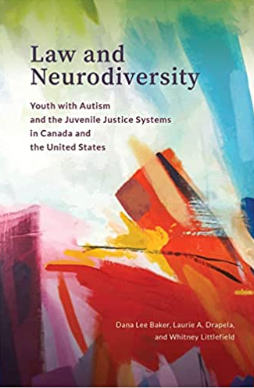
Laurie A. Drapela is a Professor of Criminal Justice at Washington State University Vancouver. Her research interests include the implementation and operation of therapeutic courts, offending desistance trajectories among youth, and the intersections of mental health, behavioral health, and criminal justice. Her manuscripts have appeared in Justice Quarterly, Crime & Delinquency, The Journal of Youth and Adolescence, Deviant Behavior, Youth & Society, and The Social Science Journal. She co-authored Law and Neurodiversity: Youth with Autism and Juvenile Justice Systems in Canada and the United States, published by University of British Columbia Press (2020).
Courses Taught
Process and Institutions, Introduction to Criminal Justice, Juvenile Justice and Corrections, Crime Control Policies, Ethical Issues in Criminal Justice, Violence Towards Women
Research Interests
Implementation and operation of therapeutic courts; social supports in correctional settings; neurodiversity and justice practice; and offending desistance trajectories among youth.
Recent Publications
- Drapela, Laurie A. (2022). Incorporating Neurodiversity into Therapeutic Jurisprudence: Understanding the Policy Diffusion Potential of Pennsylvania’s Mandatory Autism Training Law for District Court Judges. Forthcoming, Justice Policy Journal
- Drapela, Laurie A., Amelia W. Cole, Vail Fletcher, and Nick McRee. (2022). “Interpersonal Communication Competence and the Responsivity Principle among Inmates: Implications for Institutional Misconduct.” Journal of Offender Rehabilitation, 61, 4, 207-222.
- Woo, Youngki, Laurie A. Drapela, Michael Campagna, Mary K. Stohr, Zachary K. Hamilton, Xiohan Mei, and Elizabeth Thompson Tollefsbol. (2020). “Disciplinary Segregation’s Effects on Inmate Behavior: Institutional and Community Outcomes.” Criminal Justice Policy Review, 31, 7, 1036-1058.